Imagine you’re in the middle of an intense match. Your opponent is closing in, the pressure is on, and one wrong move could cost you the win. You grab your mouse and keyboard—or pick up your phone—and get ready to make your next move.
Both setups can deliver an awesome gaming experience. But the way you play, the gear you need, and the overall feel can be pretty different.
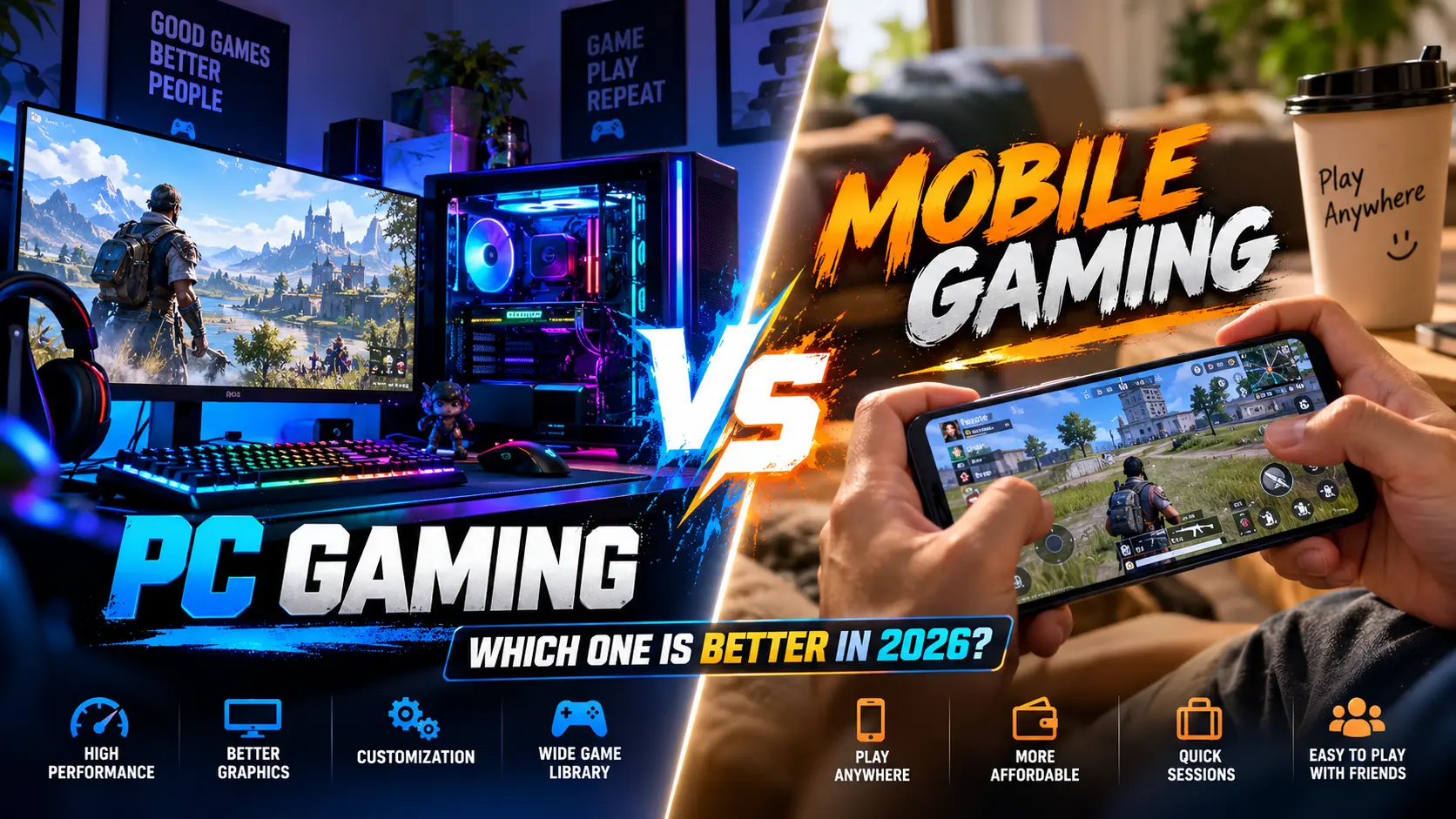
That’s why PC gaming vs mobile gaming is still a hot topic in 2026. PC gaming brings powerful performance, precise controls, and tons of customization options. Mobile gaming, on the other hand, is all about convenience, portability, and playing wherever you are.
So, which one is actually better?
Well, it depends on what you’re looking for. Your budget, favorite games, and daily routine all play a part. Let’s break down the key differences and find out which platform fits your gaming style best.
1. PC Gaming vs Mobile Gaming: What’s the Difference?
At first, the difference seems pretty obvious. PC gaming means playing on a computer, while mobile gaming means playing on a smartphone. But there’s more to it than that.
PC gaming is all about performance, flexibility, and a more immersive experience. Mobile gaming focuses on convenience, accessibility, and gaming on the go.
Here’s a quick comparison.
| Feature | PC Gaming | Mobile Gaming |
|---|---|---|
| Performance | Can deliver high-end performance with the right hardware | Depends on your phone and the game |
| Portability | Limited, especially with desktop PCs | Super easy to carry around |
| Starting cost | Can be pretty expensive | More affordable if you already own a decent phone |
| Controls | Mouse, keyboard, or controller | Touchscreen or compatible controller |
| Game library | Huge variety of PC games | Plenty of games made for smartphones |
| Graphics | Can deliver high-quality visuals | Getting better, depending on the device |
| Multiplayer | Great for competitive gaming and gaming communities | Easy to jump into online matches with friends |
| Upgrades | Many parts can be upgraded | Usually requires getting a new phone |
| Best for | Competitive play, customization, and long sessions | Quick matches and gaming anywhere |
Neither platform wins in every category. PCs offer more power and flexibility, while smartphones make gaming easier to fit into your everyday life.
The best choice comes down to what matters most to you.
2. Performance and Graphics: PC Gaming Takes the Lead
If you care about sharp graphics, smooth gameplay, and detailed environments, PC gaming has a clear advantage.
A gaming PC with a solid graphics card, a powerful processor, and enough RAM can deliver high resolutions, detailed textures, realistic lighting, and smooth frame rates. You can also tweak the graphics settings to get the right balance between visual quality and performance.
This can make a real difference in competitive games. Stable frame rates and responsive controls help you react faster when things get intense.
Still, having a powerful PC doesn’t mean everything will run perfectly. Outdated drivers, poor game optimization, overheating, or an unstable internet connection can still ruin your session.
Mobile gaming has come a long way, too. Modern smartphones can run visually impressive games, support high-refresh-rate displays, and deliver surprisingly smooth gameplay. For casual players, the graphics are often more than good enough.
The downside? Phones have limited cooling systems. Playing demanding games for hours can make your device heat up and slow down its performance.
The verdict: PC gaming is the better pick if you want top-tier graphics, strong performance, and more control over your settings. Mobile gaming is still a great option if convenience matters more than having the best visuals possible.
3. Cost: Is PC Gaming Really More Expensive?
Budget is one of the biggest reasons people choose mobile gaming.
If you already have a decent smartphone, you can download plenty of free-to-play games without buying any extra hardware. You might spend money on accessories or in-game items later, but getting started can be pretty cheap.
PC gaming usually requires a bigger investment. A desktop setup may need a graphics card, monitor, keyboard, mouse, and other components. Gaming laptops are more convenient because they combine most of these essentials into one device, but powerful models can still cost a lot.
However, the purchase price isn’t the whole story.
One major advantage of PC gaming is that you can upgrade individual components over time. Instead of buying an entirely new computer, you can replace your graphics card, add more RAM, or upgrade your storage.
With smartphones, keeping up with newer and more demanding games may eventually mean buying a new device.
Here are some common expenses to consider:
- PC gaming: Computer hardware, peripherals, electricity, game purchases, and optional subscriptions.
- Mobile gaming: Smartphone costs, mobile data or Wi-Fi, accessories, battery wear, and optional in-app purchases.
And remember, free-to-play doesn’t always mean completely free. Both platforms have games that encourage players to spend money on optional content.
The verdict: Mobile gaming is usually cheaper to get into, especially if you already own a capable phone. PC gaming costs more upfront, but upgrading individual parts can make it a flexible option in the long run.
4. Portability and Convenience: Mobile Gaming Wins
One of the biggest perks of mobile gaming is how easy it is to play almost anywhere.
You can jump into a game while traveling, waiting for a friend, chilling on the couch, or taking a quick break. There’s no need for a dedicated gaming desk or a bunch of extra equipment.
That convenience makes gaming easier to fit into your daily routine. Even a few minutes can be enough to finish a mission or squeeze in a quick match.
PC gaming is a different story. A desktop needs a proper setup, a power source, and connected peripherals. Gaming laptops are easier to carry around, but they’re still usually bulkier than a smartphone.
Of course, mobile gaming isn’t perfect. Small screens can make certain details harder to see, and touchscreen controls may feel awkward in games that require precise aiming. Battery life can also become an issue during long sessions.
On the flip side, PC gaming is often more comfortable for extended play, especially with a large monitor, a proper desk, and a setup that fits your needs.
The verdict: Mobile gaming is the clear winner for portability. If you want to play whenever and wherever you feel like it, your smartphone is hard to beat.
5. Game Selection: Which Platform Has More Options?
Your favorite games might matter more than any hardware specs.
PC gaming has a massive library covering everything from competitive FPS titles and strategy games to RPGs, survival adventures, simulations, and indie games.
Many PC games also support mods, custom servers, detailed control settings, and community-created content. These features can give players more freedom to customize their experience.
Mobile gaming has plenty to offer as well. You can find puzzle games, racing titles, battle royale matches, strategy games, casual adventures, and competitive multiplayer games designed specifically for touchscreen controls.
Another big plus is how easy it is to try new games. You can download a title straight to your phone without buying a separate gaming device.
However, not every game is available on both platforms. Some major PC titles never get mobile versions, while other games are built exclusively for smartphones. Cross-platform features also depend on the game.
Before choosing a platform, ask yourself:
- Do you enjoy complex games with lots of controls and customization?
- Do you prefer short gaming sessions throughout the day?
- Is your favorite game exclusive to a specific platform?
- Are you interested in mods and community-made content?
The verdict: PC gaming is a great choice if you want a wide variety of computer games, mod support, and deeper customization. Mobile gaming is better for accessible, easy-to-play experiences. Neither platform has every game.
6. Controls and Competitive Gaming: Precision Matters
When it comes to competitive gaming, your controls can make a real difference.
A mouse gives you precise aiming, while a keyboard lets you assign different keys to movement, abilities, and shortcuts. Depending on the game, a controller can also be a solid option.
That’s why PC gaming is popular among players who enjoy tactical shooters, real-time strategy games, and titles that require lots of key combinations.
Mobile gaming works differently. Touchscreen controls are designed for handheld play and can feel natural once you get used to them.
Experienced mobile gamers can become seriously skilled at aiming, movement, and multitasking with touch controls. Some games also support external controllers, although compatibility and competitive rules vary.
It’s worth remembering that better hardware doesn’t automatically make you a better player. Game knowledge, reaction time, practice, positioning, and smart decisions still matter a lot.
The verdict: PC gaming generally has the edge in games that rely on precise mouse and keyboard controls. Mobile gaming can be just as competitive when a game is properly designed for touchscreen play.
7. Multiplayer and Social Gaming: Playing With Friends Is Better
Gaming isn’t just about beating levels or winning matches. For many players, it’s also about hanging out with friends, working together, and being part of a community.
Both PC and mobile platforms support online multiplayer, co-op missions, ranked matches, voice chat, and other social features.
PC gaming often offers more community tools, custom servers, streaming integrations, and third-party resources. Depending on the game, players can also find guides, strategies, and active communities to help them improve.
Mobile gaming makes it super easy to invite friends into a match. You don’t need a full gaming setup or complicated configuration. If everyone has a compatible phone and a decent internet connection, you can get started pretty quickly.
The main thing to watch out for is compatibility. Just because a game is available on both PC and mobile doesn’t mean players can compete together. Some games don’t support cross-play, while others separate players based on their platform or control method.
Before choosing a game for your group, check whether it supports cross-platform play, voice chat, and shared game progress.
The verdict: Both platforms offer great ways to play with friends. PC gaming often provides more community customization, while mobile gaming makes spontaneous multiplayer sessions easier.
8. Battery Life, Heat, and Long Gaming Sessions
Here’s something that doesn’t always get enough attention: how well your device handles long gaming sessions.
Desktop gaming PCs run on continuous power and usually have more room for dedicated cooling systems. With the right setup, they can handle demanding games for hours without relying on a battery.
However, temperature, fan noise, and electricity usage still depend on your hardware and cooling setup.
Gaming laptops are more portable, but they have their own battery and heat limitations.
Smartphones face a different challenge. They need to balance gaming performance, battery capacity, and temperature inside a compact device. Graphics-heavy games can drain the battery quickly, and too much heat may cause performance to drop.
Playing while charging can also add heat under certain conditions, especially when running demanding games in a warm environment.
To keep your phone running smoothly, try lowering the graphics settings, closing unnecessary background apps, and taking a break if the device gets too hot.
For PC users, keeping fans clean, maintaining good airflow, and checking component temperatures can help keep performance stable.
The verdict: Desktop PCs are generally better for long, demanding gaming sessions because they have continuous power and more cooling capacity. Smartphones are more convenient, but battery life and heat management need extra attention.
9. Which Platform Is Better for Beginners?
If you’re new to gaming, there’s no need to spend a fortune right away.
Mobile gaming is an easy place to start. Just download a compatible game, learn the basics, and explore different genres before deciding whether you need extra equipment.
You can try everything from casual puzzle games to competitive multiplayer titles without investing in a dedicated gaming computer.
PC gaming may take a little more effort at first. You might need to adjust graphics settings, install games, update drivers, or troubleshoot performance issues. Still, modern game launchers and ready-to-use gaming PCs have made the process much easier.
As you get more experienced, a PC also gives you more room to experiment with advanced settings and upgrade your hardware.
The most important thing is to choose a platform that fits your budget, free time, and favorite games—not one that other players claim is the best.
The verdict: Mobile gaming is a simple, budget-friendly way to get started. PC gaming is a better fit if you want to explore more advanced features and have the budget for a dedicated setup.
Visit: Garuda99 Online
10. PC Gaming vs Mobile Gaming: Which One Should You Pick in 2026?
After comparing performance, cost, convenience, game selection, and controls, choosing the right platform becomes much easier.
Go for PC gaming if you:
- Want high-quality graphics and customizable performance.
- Enjoy competitive games that require precise controls.
- Love mods, customization, and a huge selection of PC games.
- Prefer long gaming sessions at home.
- Want the option to upgrade individual components.
Go for mobile gaming if you:
- Want to play almost anywhere.
- Prefer quick matches and casual sessions.
- Already own a capable smartphone.
- Don’t want to buy a dedicated gaming computer.
- Enjoy games built around touchscreen controls.
Consider both if you:
- Enjoy different types of games depending on your mood.
- Want competitive sessions on PC and casual gaming on your phone.
- Play games that support cross-platform progression.
- Care more about the experience than sticking to one platform.
There’s no rule saying you have to pick just one. Plenty of gamers use both because each device serves a different purpose.
You can use your PC for serious gaming sessions at home and switch to your phone when you’re traveling or have a few minutes to spare.
The key is to get the most out of each platform instead of forcing yourself to choose a side.
Final Verdict: PC Gaming or Mobile Gaming?
So, which one comes out on top in 2026?
PC gaming is better for high performance, precise controls, customization, and immersive gameplay. Mobile gaming is better for portability, convenience, and easy access.
But the real winner isn’t necessarily the device with the highest specs or the biggest game library. It’s the platform that fits your lifestyle and gives you the experience you’re looking for.
If you’re into competitive matches, detailed graphics, and customizable controls, investing in a gaming PC could be worth it. If you prefer quick sessions, play while traveling, or want an easy way to game with friends, mobile gaming might be the better fit.
And if you enjoy both, there’s no reason to limit yourself to just one.
At the end of the day, gaming is about having fun, taking on challenges, improving your skills, and connecting with other players. You don’t need to prove that one device is better than another to enjoy the experience.
Now it’s your turn: Are you Team PC or Team Mobile? Which platform gives you the best gaming experience, and what’s the one game that keeps you coming back for more?
Stay tuned to ADEMO Gaming for more gaming guides, tech updates, and practical tips to help you get more out of your favorite games.